Every parent knows that getting preschoolers to engage can feel like herding cats. But what if there was a magical tool that could turn chaos into giggles? Enter rhyming songs! These catchy tunes not only capture little ones’ attention but also help them develop language skills, memory, and creativity—all while having a blast.
Importance Of Rhyming Songs For Preschoolers
Rhyming songs hold significant value for preschoolers. These playful melodies enhance multiple aspects of early learning.
Developmental Benefits
Rhyming songs contribute to cognitive development. Engaging with catchy tunes supports memory skills and pattern recognition. Preschoolers practice listening and repetition, which fine-tunes auditory processing. They also experience rhythm and beat, fostering motor skills during dancing or hand clapping. Through playful interactions, children build social skills, learning to share and participate in group activities.
Language Acquisition
Language acquisition flourishes through rhyming songs. Exposure to catchy lyrics promotes vocabulary expansion and phonemic awareness. Young children recognize sound patterns, which aids reading development. They develop pronunciation and articulation while singing along. Rhymes also instill a sense of linguistic structure, making it easier for preschoolers to form sentences. Overall, these songs serve as engaging tools that accelerate language learning in a fun environment.
Popular Rhyming Songs


Rhyming songs capture preschoolers’ attention and support their developmental needs. Various options exist, ranging from timeless classics to exciting new releases.
Classics and Favorites
Many classic rhyming songs continue to engage young listeners. “Twinkle, Twinkle, Little Star” remains a beloved choice, offering soothing melodies and simple lyrics. “Humpty Dumpty” features a catchy narrative that encourages participation. “Mary Had a Little Lamb” introduces rhythm while teaching about animals and the bond between a child and a pet. “Baa Baa Black Sheep” provides a fun rhythm and an opportunity to explore colors and counting. These traditional songs serve as foundational tools for language and memory development.
New Releases
New rhyming songs frequently emerge, captivating today’s preschoolers. “Baby Shark” has gained immense popularity, combining vibrant visuals with an infectious tune. “The Wheels on the Bus” has newer versions that emphasize interactive learning and movement. “Give Me a Wave” encourages children to engage physically while improving their vocabulary. Many educational platforms release original rhyming songs, focusing on themes relevant to preschoolers, like friendship and sharing. These fresh additions enhance the learning experience through modern rhythms and relatable topics.
How To Incorporate Rhyming Songs
Incorporating rhyming songs into daily activities engages preschoolers and enhances their learning experience. Effective methods exist for both classroom settings and home environments.
In The Classroom
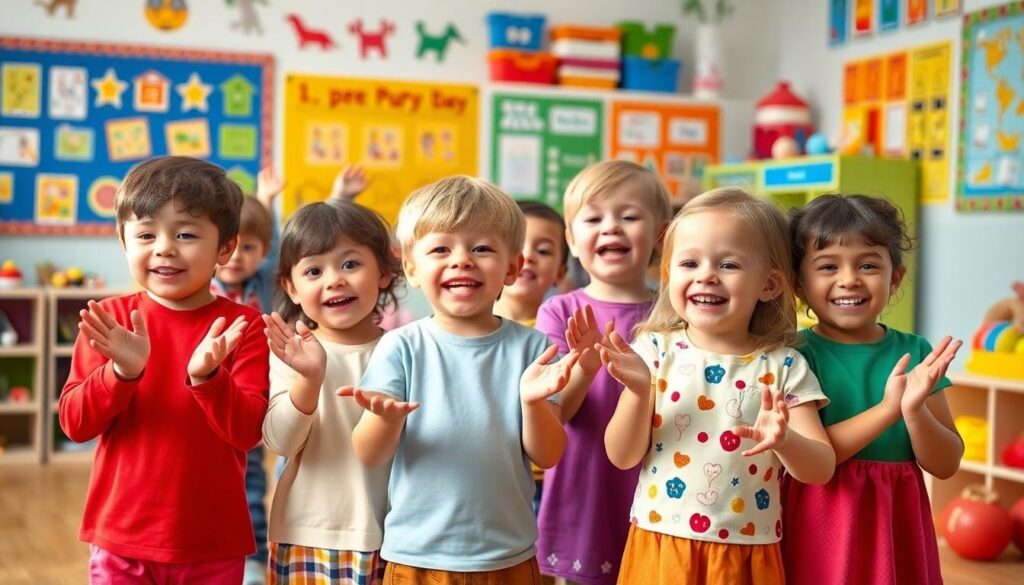
Integrating rhyming songs into classroom routines creates an interactive atmosphere. Teachers can begin the day with a short song, energizing students and setting a positive tone. Using movement helps reinforce rhythm, allowing children to dance or do actions that correspond to the lyrics. Sing-alongs during circle time encourage participation and foster teamwork. Additionally, incorporating songs related to specific lessons, such as counting or animals, can make learning concepts more tangible and relatable. Including visual aids, like picture cards, supports comprehension and retention.
At Home
Parents can easily incorporate rhyming songs into daily life, making learning fun. Music during playtime engages children while reinforcing vocabulary and language skills. Singing songs during bath time or while preparing meals turns ordinary moments into learning opportunities. Reinforcing routines, like bedtime or quiet time, with calming rhymes promotes relaxation and bonding. Additionally, creating a playlist of favorite rhymes allows for repetitive learning, helping children master the lyrics. Engaging in musical activities, such as creating simple instruments, further enhances children’s involvement in the learning process.
Tips For Engaging Preschoolers
Engaging preschoolers with rhyming songs involves creativity and interaction. Simple activities enhance their enjoyment and learning.
Interactive Activities
Incorporating rhyming songs into playful activities captivates preschoolers’ attention. Storytime can transform into a musical adventure by singing along with the tale. Crafting simple projects related to song themes reinforces learning. For instance, creating a paper chain for “Baa Baa Black Sheep” illustrates the song’s narrative. Games that involve singing and matching lyrics keep children active and involved. Using songs during group play encourages social interaction and teamwork. Incorporate props, like puppets or stuffed animals, to stimulate imagination. This hands-on approach makes learning enjoyable and memorable.
Using Actions and Movements
Actions and movements paired with rhyming songs foster active participation. Encourage preschoolers to clap, jump, or dance while singing, enhancing rhythm and coordination. Implementing sign language to accompany specific words deepens their understanding. For example, using gestures for “twinkle” in “Twinkle, Twinkle, Little Star” adds a kinesthetic element. Changing the pace or volume of the music creates excitement or calmness, engaging their emotions. Movement-based activities, like following simple dance routines, reinforce memorization. Not only do these actions promote physical development, but they also make songs more engaging and fun.
Conclusion
Rhyming songs offer a dynamic way to engage preschoolers while supporting their developmental growth. By incorporating these catchy tunes into daily routines and activities, parents and teachers can create an interactive learning environment that fosters language skills and creativity.
The blend of rhythm and movement not only entertains but also enhances memory and cognitive abilities. As children sing along and participate in related activities, they build a foundation for language acquisition that will serve them well in their educational journey.
Embracing the joy of rhyming songs transforms ordinary moments into rich learning experiences, making it an essential tool for nurturing young minds.